
One of the many joys of our good life is the granola Becky bakes once a week or so and I eat almost every morning. Frankly, it is the best granola ever. Hemp seed is included on the ingredient list. We are told that hemp seed is a great source of protein, amino acids, and other healthy things. And no THC in these hemp seeds.
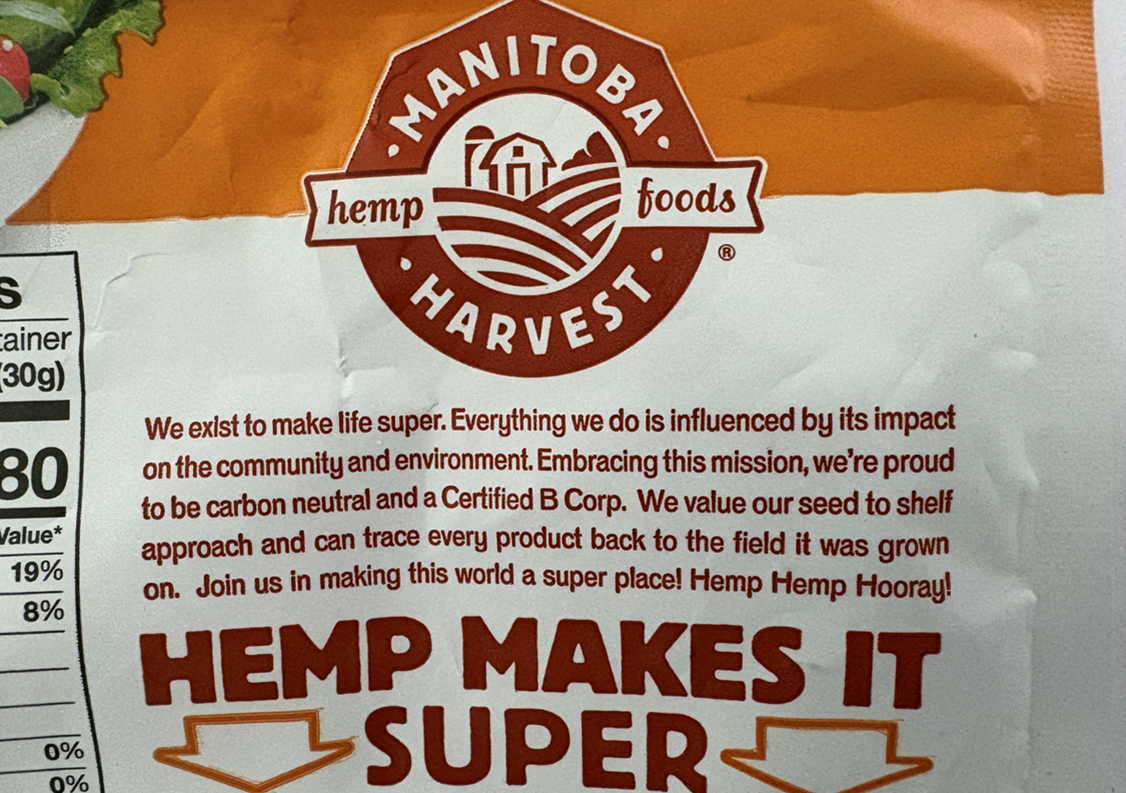
The other day I was looking at the cheery package in which our hemp seed is delivered from our Canadian supplier, Manitoba Harvest. The people at Manitoba Harvest say they “exist to make life super,” and they invite those of us who consume their product to join them “in making this world a super place.”
Hemp Hemp Hooray.
The presbytery committee of which I am a member is called the Church Health Committee. One of our tasks is to assist the leaders of our congregations as they seek to revitalize and reenergize the ministries of their churches. One of the first steps in the process is to articulate a vision or mission statement – what is God calling this church to do in this place at this time? Such vision statement should be clear, memorable, and even a bit pithy. The idea is that everything a church does should be rooted in its mission statement. Now, I have never been a big mission statement fan, but several of the churches I served had such statements on their websites or printed on their stationery – remember when churches had stationery? “To Know Christ and Make Him Known” one church said of itself. “Sharing the Life of Jesus,” another declared. From children’s Sunday school to the youth group to community service to Lord’s Day worship all we did was to be measured by our mission statements. I am not sure we succeeded, but perhaps we did.
I don’t know how it would look on a church’s website, but “To Make Life Super” is definitely pithy. And what better mission than “making the world a super place”? One of the health and wealth churches might want to think about using it. Their pastor could write a book, “Your Super Life Now.”
Sometimes as I am crunching my morning granola, I think about the church and its mission. The Shorter Catechism tells us our mission, our purpose, is “to glorify God and enjoy him forever.” Heidelberg calls us to a life of gratitude for all God has done for us. Jesus invites us to abide in him. Paul looks forward to finishing the race, reaching the goal, to seeing face to face what we now see in a mirror dimly, to being united with Christ. Union with Christ, the theologians say.
To be sure, evangelism and acts of mercy, service, and justice are parts of our mission, but they are corollary to our first call to union with Christ, to the glorious hope of the gospel, to abiding in Jesus and his love. We are to glorify God and enjoy him forever. The church is that community, that family, where God is glorified and enjoyed in all we do. Programs come and go; our mission never changes. Our lives are to be transformed by the gospel from self-absorption to love of God and neighbor. One life at a time we invite others into that transformed life.
Those who advocate for missions of mass evangelism or programs of social change find a “one life at a time” strategy to be inefficient in its approach and insufficient for the needs of our times. But from the favelas of urban Brazil to the rural villages of Guatemala, from North Philadelphia to the tree-lined streets of the suburbs, “one life at a time” is the only lasting and effective strategy I have seen.
Amazingly, surprisingly, living and bearing witness to a life marked by union with Christ really is super, if not in the way Manitoba Harvest means it.
Hemp Hemp Hooray!